
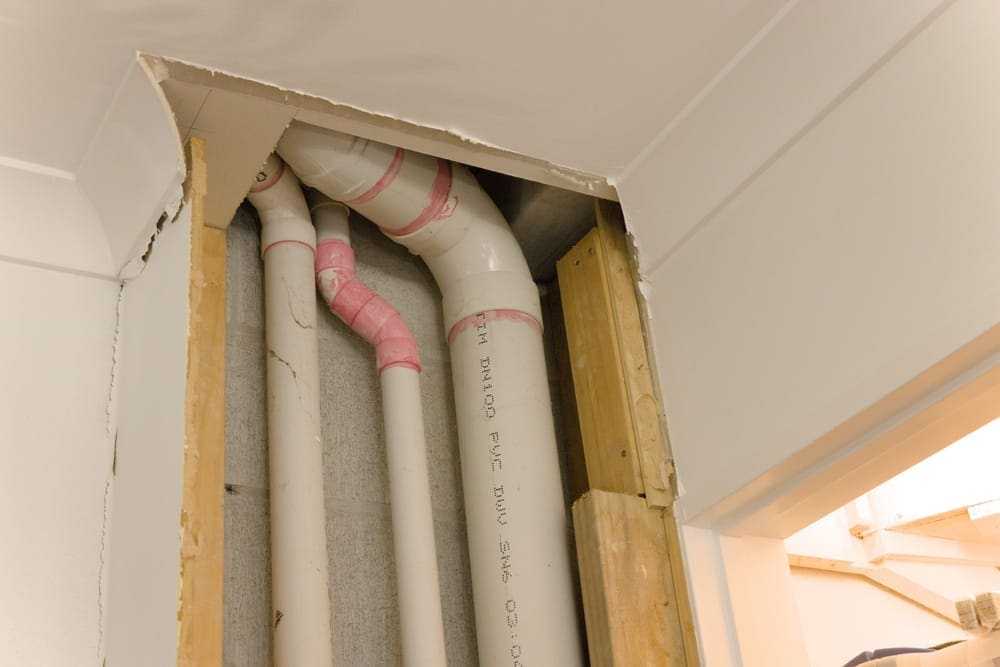
The plumber just wrapped up your repipe project, and the water’s running better than ever. But now there are dozens of rectangular holes in the walls throughout your home.
Should you have planned ahead for this?
Most homeowners are surprised to learn that drywall repair after repiping is a completely separate step from the plumbing work—and in most cases, it’s not handled by the plumber.
In North Texas, especially in slab-foundation houses common across DFW, pipes are often routed through walls rather than under floors. That means more access points in your walls—and more drywall repairs afterward.
In this guide, we’ll walk you through the process of drywall repair after plumbing, including how many access holes to expect in your wall, what the repair process looks like, how texture matching works, timelines, costs, and when it makes sense to call a local drywall repair professional.
Why Does Repiping Leave So Many Holes in Your Walls?
Repiping leaves holes in your walls because plumbers must access the water lines inside wall cavities. Each connection point, fixture, and branch line requires an opening, resulting in multiple cuts throughout the home.
Repiping is a plumbing service that replaces all the water supply lines in your home, separate from the sewer or drainage system. Since water supply lines run behind drywall, plumbers must open the walls at key locations to reach them.
These access points are typically made:
- Near sinks, showers, and toilets
- Along hallways where pipes branch
- Behind appliances like washing machines
The number of holes depends on your home’s size, layout, and pipe routing strategy. In DFW, many repipes use PEX piping, which is flexible and requires fewer cuts than rigid copper.
Here’s a general breakdown of how many holes to expect in your walls after a typical repipe project:
| Home Size | Typical # of Access Holes | Location Notes |
| 1,000–1,500 sq ft | 8–15 | Bathrooms + kitchen walls |
| 1,500–2,500 sq ft | 15–25 | Multi-bath homes; hallway walls |
| 2,500+ sq ft | 25–40+ | Two-story homes add ceiling access |
Note: These ranges are estimates. Actual counts vary based on layout and plumbing design.
Does the Plumber Fix the Drywall? (What Most Homeowners Don’t Know)
Most repipe companies do not repair drywall. Plumbing and drywall are separate trades that require separate licensing, and most plumbers leave the drywall repair after repiping to a different contractor. Some plumbers may subcontract drywall work, but most leave the decision entirely up to the homeowner.
If you’re planning a repipe, plan ahead by asking these questions upfront:
- Do you repair the drywall, or do I need a separate contractor?
- Will cuts be made clean and square for easier patching?
- Will drywall be fully finished or just roughly patched?
- How soon can repairs start after inspection approval?
What Does Drywall Repair After Repiping Actually Involve?
Drywall repair after repiping is a multi-step process that ensures your walls look seamless again. When done correctly, you shouldn’t be able to tell where the plumber’s cuts were made.
Here’s what the process typically looks like:
Step 1 — Assess and Prep Each Opening
At this stage, the drywall technician checks inside the wall for:
- Moisture
- Debris
- Loose materials
Each hole is also inspected to make sure the edges are clean and square. Clean cuts made during the repipe can significantly reduce repair time and cost. If the plumber made rough or jagged cuts, they’ll need to be trimmed before patching can begin. Always carefully vet your plumber before hiring.
Step 2 — Install Backer Boards and Patch Panels
For openings that don’t land on a stud, a backer board is installed behind the drywall. This gives the patch something solid to attach to.
Then:
- A drywall patch is cut to fit the opening precisely
- In some cases, the original cutout can be reused if the plumber saved it
- The patch is secured with screws and aligned flush with the wall
Step 3 — Tape, Mud, and Feather
This is when the drywall repair starts to blend in.
- Seams are covered with mesh or paper tape
- Joint compound (mud) is applied in layers
- Each layer is sanded and extended outward (feathered)
Feathering is a critical technique that spreads the mud beyond the patch so it blends into the surrounding wall. Without it, patches will remain visible even after painting.
Typical drying time:
- 24 hours per coat
- 2–3 coats total
Step 4 — Texture Matching
Texture and paint matching is the step that separates professional results from DIY patches, as each wall texture requires a different technique and tool. A skilled technician will replicate the existing pattern so the repair disappears into the wall.
Common textures in DFW homes include:
- Orange peel
- Knockdown
- Smooth finish
Important note: Mismatched texture cannot be fixed with paint. If the texture doesn’t match, the patch will always stand out.
Step 5 — Prime and Paint-Ready Finish
Once the texture dries, the patched areas are primed to:
- Seal the drywall
- Create an even surface for paint
- Prevent flashing (uneven sheen after painting)
At this point, the wall is fully repaired and ready for paint. Some homeowners choose to paint themselves, while others have the drywall team handle the final coat for a complete finish.
How Long Does Drywall Repair Take After a Repipe?
Drywall repair after a whole-home repipe typically takes 2–4 days for patching and texturing, plus 1–2 additional days if painting is included.
The full project timeline depends on several factors, including the number of holes, drying conditions, and inspection timing. Texas’s humidity can slow drying times, especially during the summer months.
Here’s a general timeline breakdown:
| Phase | Typical Timeline |
| Plumbing repipe (installation) | 1–3 days |
| Municipal inspection | 1–5 business days |
| Drywall patching + texturing | 2–4 days |
| Paint (if included) | 1–2 additional days |
| Total project timeline | 7–14 days typical |
Scheduling your drywall repair services in advance helps avoid delays once the inspection is complete.
How Much Does Drywall Repair After Repiping Cost in DFW?
The cost of drywall repair after repiping varies depending on the size of the job. Factors like the number of holes, their size, wall texture, and paint needs all play a role.
On average:
- Small repair jobs can start around $100–$1,000
- Larger projects (like whole-home repipes with 10–30+ holes) typically range from $800 to $2,500+
Costs tend to increase when:
- Holes are larger and require backing support
- Walls have textured finishes that need precise matching
- The home has multiple stories or hard-to-reach areas
- Painting is included in the project
If you’re planning to get your home repiped, contact Drywall Doctor today for a free drywall repair assessment and estimate based on your project’s scope. Getting a quote before your repipe begins helps you plan your budget and streamline project schedules.
DIY vs. Professional Drywall Repair After Repiping
For one or two small holes, DIY drywall repair might be manageable. But whole-home repipe repairs are a different story. When you’re dealing with multiple rooms and dozens of patches, consistency and finish quality become much harder to achieve without experience.
Here’s a quick comparison between DIY and professional drywall repair after plumbing:
| DIY | Professional |
| Lower material cost | Higher upfront cost, no redo risk |
| Works for 1–2 small holes | Ideal for 10+ holes across multiple rooms |
| Texture matching is difficult | Seamless texture matching |
| Visible patches are common | Smooth, paint-ready finish |
| Time-consuming | Completed in 2–4 days |
Common DIY mistakes include:
- Visible seams after painting
- Uneven texture
- Poor paint adhesion from skipping primer
When to Call Drywall Doctor DFW for Post-Repipe Repair
If your home has more than 2-3 wall openings after a repipe, it’s time to speak with a drywall repair specialist.
Drywall Doctor serves homeowners across:
- Dallas
- Fort Worth
- Plano
- Frisco
- McKinney
- Arlington
- Irving
- Garland
- Mesquite
With experience handling post-repipe repairs, our team will restore your walls quickly and match textures so patches disappear. Call us at (817)-885-7737 today for help repairing drywall after a whole home repipe!
Frequently Asked Questions About Drywall Repair After Repiping
Does the plumber fix the drywall after repiping?
Most plumbers do not repair drywall since it’s a separate trade. Some companies subcontract it, but many leave it to the homeowner. Always check with your plumber before the work begins.
How many holes does a whole-home repipe create?
Most homes end up with 10–30+ holes, depending on size, layout, and pipe routing. Larger or two-story homes usually require more access points.
Can I reuse the original drywall cutouts?
Yes, you can reuse the original drywall cutouts if they were clean and the pieces were saved. Doing so reduces material costs and speeds up the repair process.
How soon can drywall repair start after repiping?
Repairs usually begin after the municipal inspection is completed, which can take 1–5 business days. Scheduling ahead helps avoid unnecessary delays.
Will the patches be visible after painting?
Correct mudding, feathering, texture matching, and priming, patches should be invisible after paint.
How much does drywall repair after repiping cost in DFW?
Most full-home repairs range from $800 to $2,500+, depending on scope and finish level.
Is drywall repair after repiping covered by insurance?
It depends. Repairs tied to unexpected damage (like a burst pipe) may be covered, but planned repipes are usually not. Always check your policy.