

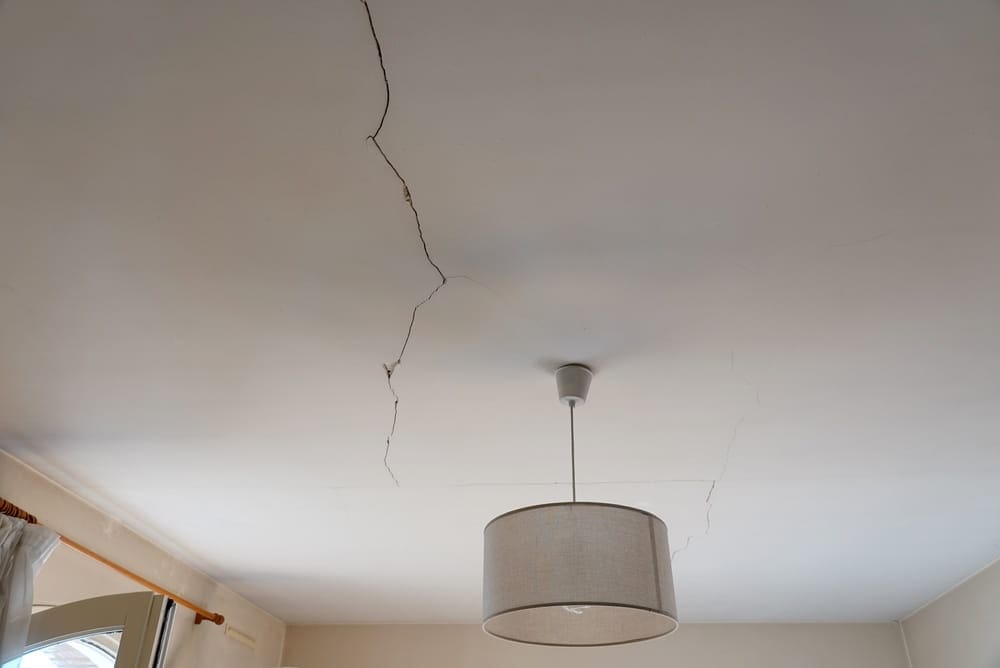
Picture this: you’re lying in bed, staring at the ceiling, and suddenly you notice a crack that definitely wasn’t there before. It’s thin, maybe jagged, maybe running along a seam—and now it’s all you can think about.
So, why is your ceiling cracking? In most cases, ceiling cracks are caused by normal settling, drywall installation issues, temperature changes, moisture, or foundation movement. Some are purely cosmetic, while others can signal a bigger structural issue.
The good news? Most ceiling cracks aren’t emergencies. But there are some that should never be ignored.
In this guide, we break down:
- The different types of ceiling cracks
- What causes cracks in the ceiling
- When to worry
- How to fix minor issues vs when to call a professional for ceiling crack repair
If you’re in North Texas, it’s especially important to pay attention. Expansive clay soils and extreme temperature swings can accelerate cracking and worsen small issues over time.
What Causes Ceiling Cracks?
Ceiling cracks are most commonly caused by natural settling, drywall installation problems, temperature and humidity fluctuations, moisture damage, or foundation movement. Whether a crack is cosmetic or structural depends on its width, shape, location, and whether it’s growing. Most are harmless—but some require professional attention.
Types of Ceiling Cracks and What They Mean
The fastest way to understand what you’re dealing with is to identify the type of crack.
Ceiling Crack Reference Guide
| Crack Type | Likely Cause | Severity |
| Hairline/spiderweb | Age, paint buildup, humidity | Cosmetic |
| Straight along a seam | Drywall tape failure, poor installation | Cosmetic |
| Discolored (yellow/brown) | Water leak above | Moderate — fix the leak first |
| Wide (>1/8″) or growing | Foundation settlement, structural load | Serious — inspect now |
| Crack + sagging | Structural damage, water saturation | Serious — act immediately |
| Crack running down a wall | Foundation movement | Serious — inspect now |
| At the wall-ceiling junction | Truss uplift or foundation shift | Moderate to Serious |
Hairline and Spiderweb Cracks
These are the most common types of ceiling cracks—and usually the least concerning. A simple repair using joint compound and paint is usually all it takes to fix them.
Hairline cracks often appear in DFW due to:
- Layers of paint building up over time
- Minor shifts in your home’s structure
- Seasonal humidity changes
Why Is My Ceiling Cracking at the Seams?
If your crack runs in a perfectly straight line, you’re likely looking at a seam crack. These happen along drywall joints and are typically caused by:
- Poor drywall installation
- Not enough joint compound (“mud”)
- Tape that has loosened or failed over time
This type of cracking at the seams is not structural, but it does indicate workmanship issues. In newer homes, seam cracks are especially common within the first year as the house settles and materials shift slightly.
Discolored Cracks (Yellow or Brown Staining)
If you see a crack with yellow or brown staining around it, don’t ignore it. This almost always means moisture is (or was) present.
Common causes include:
- Roof leaks
- Plumbing leaks from above
- HVAC condensation issues
Fixing the ceiling without fixing the leak first will not solve the problem. Moisture weakens drywall and causes repeated cracking. Before any repair, the source of the water must be identified and resolved.
Wide, Long, or Growing Cracks
A crack in the ceiling becomes a concern when it is:
- Wider than 1/8 inch
- Longer than 12 inches
- Getting bigger over time
These cracks often point to deeper structural movement, especially foundation issues.
In North Texas, this is common due to expansive clay soil. When the soil absorbs water, it expands. During dry periods, it shrinks. This constant movement can shift your foundation—and that stress shows up as cracks in your ceiling.
If you notice this type of crack, have it evaluated before attempting any cosmetic repair.
Cracks Accompanied by Sagging
If your ceiling is cracking and sagging, this is a red flag. Possible causes include:
- Water saturation weakening the drywall
- Structural damage to joists or framing
- Excess weight from above
This is not a DIY situation, and in extreme cases, it can lead to partial ceiling collapse. Address these types of ceiling cracks immediately to prevent further damage or safety risks.
What Causes Ceiling Cracks? The 6 Most Common Reasons
Now that you know what type of crack you’re dealing with, the next step is understanding why your ceiling is cracking in the first place.
“Why Is My Ceiling Cracking?” Here are the six most common causes:
- Normal house settling
Every home shifts slightly over time. As materials settle into place, small stress points form—leading to minor cracks. This is especially common in the first few years after construction and is usually cosmetic. - Drywall installation problems
Poor workmanship can show up months or even years later. If drywall wasn’t taped or mudded properly, cracks will form along seams or joints. These are not structural, but they do require proper repair and paint. - Humidity and temperature fluctuations
In North Texas, extreme heat, sudden cold snaps, and seasonal humidity swings put constant stress on ceilings, which can lead to drywall expansion and cracking. - Water damage from leaks
Leaks from the roof, plumbing, or HVAC systems weaken drywall over time. As the material softens and shifts, cracks form—often accompanied by staining. These need immediate attention to prevent further damage. - Foundation movement
DFW’s expansive clay soil absorbs water and swells, then shrinks during dry periods. This movement shifts your foundation and puts stress on your home’s structure. - Truss uplift
This is a lesser-known but very common issue. During colder months, roof trusses can lift slightly due to moisture differences between the attic and the rest of the home. This creates cracks at the wall-ceiling junction that may disappear and reappear seasonally.
Is My Ceiling Crack Serious? A Quick Checklist
Not sure if your ceiling crack is something minor or something bigger? Use this quick checklist to decide.
Call a Professional If:
- The crack is wider than 1/8 inch
- The crack is longer than 12 inches
- The ceiling is sagging near the crack
- The crack runs from the ceiling down a wall
- The crack keeps coming back after repairs
- You notice other warning signs like:
- Sticking doors or windows
- Sloping floors
- Cracks in exterior brick
Likely Safe for DIY Repair If:
- It’s a single hairline crack
- The crack follows a straight drywall seam
- There is no discoloration or sagging
- The crack is small and hasn’t changed over 2–4 weeks
How to Fix Minor Ceiling Cracks (DIY)
If your ceiling crack is small and cosmetic, you can usually fix it yourself with the right approach. However, the key is doing it correctly the first time—otherwise, the crack will come back.
Step-by-Step Ceiling Crack Repair
- Prep the crack
Use a utility knife to slightly widen the crack. This helps the repair material adhere better, rather than just sitting on the surface. - Clean the area
Remove dust, debris, or loose drywall so the compound bonds properly. - Apply joint compound
Use a putty knife to apply a thin layer of joint compound (or spackle for very small cracks). - Reinforce seam cracks
If the crack runs along a seam, apply fiberglass mesh tape before adding compound. This prevents the crack from reopening. - Feather and smooth
Blend the edges outward so the repair sits flush with the surrounding ceiling. - Sand after drying
Once dry (typically 24 hours), sand the area smooth. - Prime the surface
Use a stain-blocking primer—especially if there is any discoloration. - Repaint to match
Match the existing ceiling color and texture as closely as possible.
The Hardest Part: Texture Matching
This is where most DIY repairs fall short. Ceiling textures are extremely difficult to match perfectly without professional tools and experience. Even if the crack is fixed structurally, a poor texture match will make the repair stand out.
If you want a seamless finish, contact a professional for texture and paint matching services.
When to Call a Ceiling Repair Professional in DFW
Some cracks go beyond a simple patch job. Trying to fix a deeper issue without addressing the root cause often leads to recurring cracks, wasted time and money, and bigger repairs later.
Call a professional ceiling repair company if:
- You’ve already patched the crack and it came back
- There is water staining or suspected moisture
- The crack is wide, long, or growing
- The ceiling is sagging at all
- You’re unsure if the issue is structural
- You want a clean, seamless finish
Get a Seamless Ceiling Repair in DFW
Ceiling cracks are frustrating, but they don’t have to be permanent. At Drywall Doctor, our family specializes in:
- Identifying the real cause of cracks
- Professional drywall repair solutions
- Matching texture and paint for a flawless finish
So, stop asking yourself, “Why is my ceiling cracking at the seams?” and start getting answers. Whether it’s a small cosmetic crack or a larger issue related to movement or moisture, contact our team today to help restore your ceiling so it looks as if the damage never happened.
Frequently Asked Questions About Ceiling Cracks
Are ceiling cracks normal?
Yes, minor ceiling cracks are common in most homes. Hairline cracks and seam cracks caused by settling or humidity changes are cosmetic and not structurally concerning. Larger, growing, or discolored cracks may indicate a more serious issue.
What kind of ceiling cracks should I worry about?
You should be concerned about cracks that are wider than 1/8 inch, longer than 12 inches, growing over time, or accompanied by sagging or discoloration. These can signal structural issues, foundation movement, or water damage.
Why is my ceiling cracking at the seams?
Seam cracks are usually caused by poor drywall installation—specifically, inadequate joint compound or failing tape. These are cosmetic but require proper repair with mesh tape and compound to prevent them from returning.
Can foundation problems cause ceiling cracks?
Yes. In DFW, expansive clay soil causes foundations to shift as it expands and contracts. This movement stresses the structure above and often leads to cracks in ceilings and walls.
What is truss uplift and can it crack my ceiling?
Truss uplift occurs when roof trusses move upward due to seasonal moisture changes. This creates recurring cracks at the wall-ceiling junction. While not typically dangerous, it can be frustrating and requires the right repair approach.
Will painting over a ceiling crack fix it?
No. Paint alone will not fix cracks in the ceiling. Without proper repair using joint compound and tape for seams, the crack will almost always return.